
Show summary Hide summary
- Why soil aeration is essential for a healthier lawn
- Choose timing based on your grass type and climate
- How to prepare your lawn for aeration
- Tools, methods, and what to expect during the process
- Overseeding, fertilizing, and watering after aeration
- Benefits you’ll notice the following spring
- Quick checklist: when and how to aerate this year
A thick, green lawn after a long winter doesn’t happen by accident. One of the most important steps is aeration — creating channels in the soil so roots can access air, water, and nutrients. Timing that job correctly makes all the difference between a struggling turf and a vibrant yard come spring.
Why soil aeration is essential for a healthier lawn
Aeration relieves compacted soil so grassroots can expand. Heavy foot traffic, repeated mowing, and soaked soil all squeeze out air pockets. When soil becomes dense, water runs off and nutrients sit on the surface.
Michaels holiday finds under $25: 20 new gifts that look like $50
Target wall-mounted find frees up countertop space: timeless style for small kitchens
Proper aeration improves water absorption, promotes deeper roots, and helps fertilizer reach the soil. It also reduces runoff and standing water, which lowers disease risk.
Choose timing based on your grass type and climate
Not all grasses respond the same. The best time to aerate depends on whether you have warm-season or cool-season turf.
Cool-season grasses: aim for early fall
For fescue, ryegrass, and Kentucky bluegrass, aerate in early to mid-fall. Target weeks when daytime highs regularly fall below 80°F.
- Aerate after a rain or following a light watering. The soil should be moist but not waterlogged.
- If you plan to overseed, aerate first. The holes help seed-to-soil contact and improve germination.
- Fall aeration gives roots time to recover before winter dormancy.
Warm-season grasses: spring or early summer works best
Bermuda, zoysia, and St. Augustine respond best when they are actively growing. Aerate in late spring or early summer, during peak growth.
- Avoid aerating in extreme heat. Recovery slows when temperatures spike.
- For lawns that see heavy summer use, an annual aeration in late spring supports deeper rooting through the hot months.
How to prepare your lawn for aeration
Success starts before the machine runs. Follow simple prep steps to make aeration more effective.
- Mark buried utility lines and sprinkler heads to avoid damage.
- Water the lawn a day or two before aerating to soften the soil.
- Mow to a slightly lower height so holes penetrate the root zone more easily.
Do not aerate when the turf is dormant or frozen. The grass needs to be able to recover for aeration to help.
Tools, methods, and what to expect during the process
Homeowners choose between spike aerators and core (plug) aerators. Each leaves different results.
- Spike aerators push into the soil and make holes. They can increase compaction around the hole margins.
- Core aerators remove small plugs of soil. They are preferable for reducing compaction and improving long-term soil structure.
- For large yards or heavy compaction, consider renting a powered core aerator.
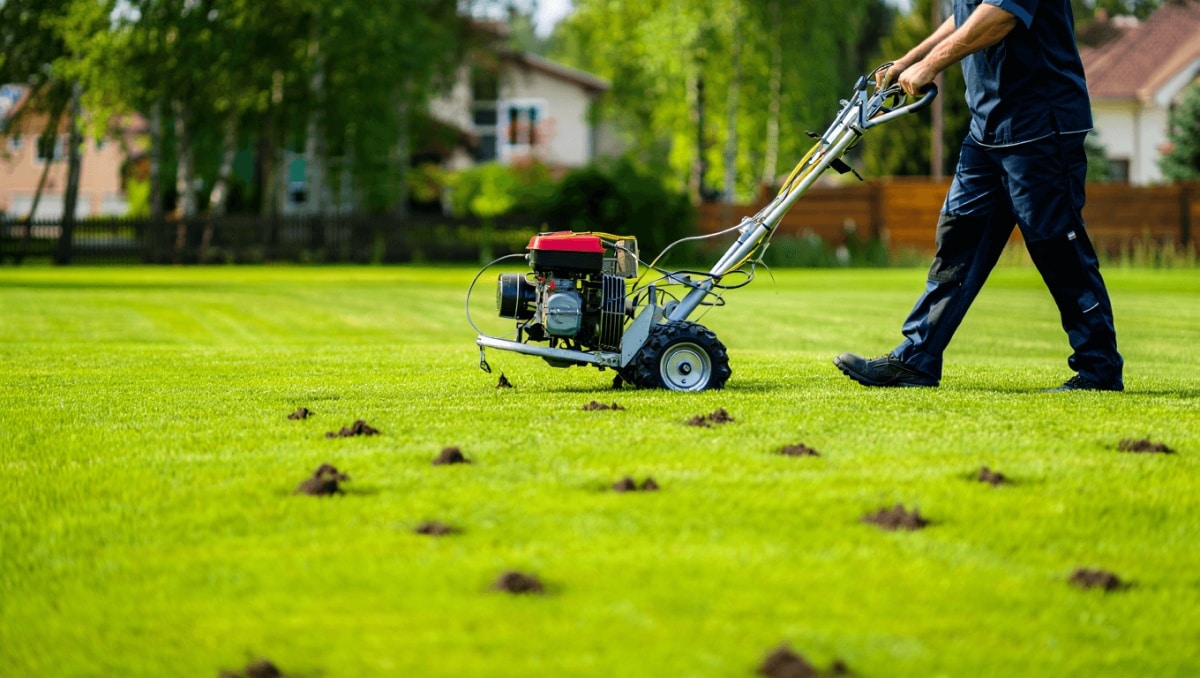
After aeration, you may see soil plugs left on the surface. Leave them to break down naturally. This material will return nutrients to the soil.
Overseeding, fertilizing, and watering after aeration
Aeration opens a window for seed and treatments to work better. If overseeding, spread seed immediately after aeration.
- Top-dress with a thin layer of compost or soil to help seed contact the ground.
- Apply starter fertilizer formulated for new seed if overseeding.
- Keep the surface consistently moist until seeds germinate and seedlings establish.
Regular, light watering is more effective than infrequent deep watering during establishment. Once roots deepen, transition to a deeper, less frequent schedule.
Benefits you’ll notice the following spring
A properly timed aeration leads to a fuller, more even turf. Expect improved drainage, fewer bare spots, and better absorption of lawn care products.
- Stronger root systems that withstand drought and wear.
- Reduced thatch layer and lower disease likelihood.
- More uniform turf color and density in the growing season.
Quick checklist: when and how to aerate this year
- Identify your grass type: cool-season or warm-season.
- Pick the right season: fall for cool-season, spring/early summer for warm-season.
- Prepare the lawn: water lightly, mark obstacles, mow shorter.
- Use a core aerator when possible for best results.
- Follow up with overseeding, fertilizing, and consistent watering.










