
Show summary Hide summary
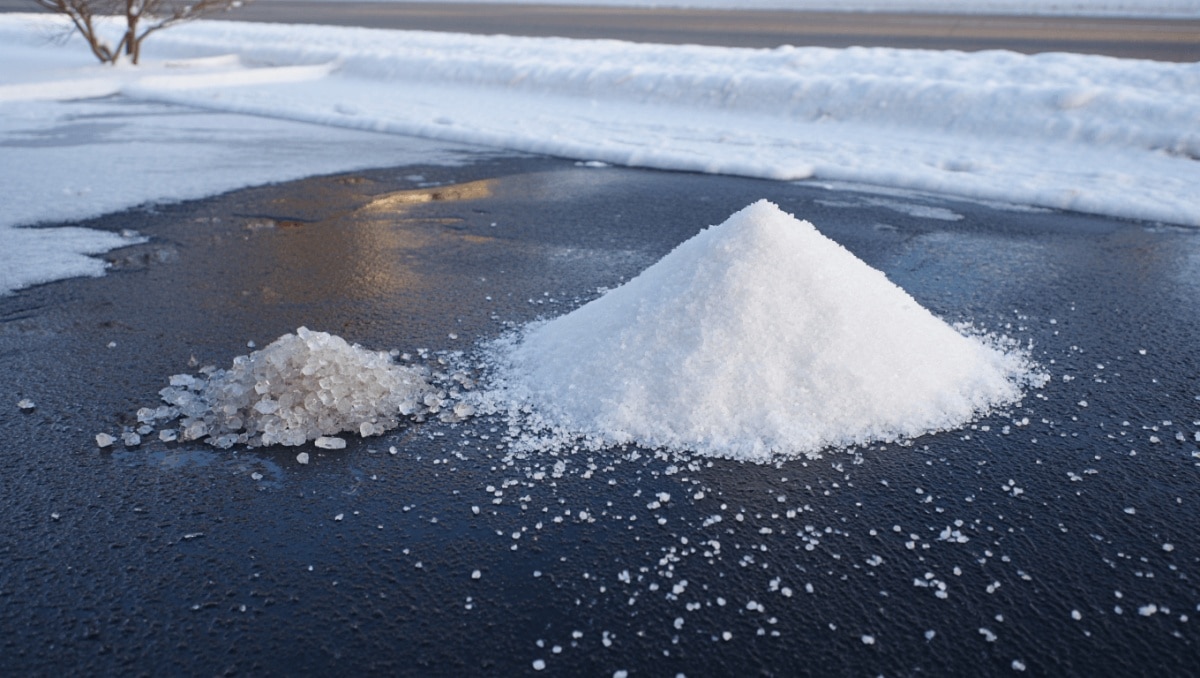
When winter slices through pavement and your ordinary bag of rock salt barely makes a dent, there’s a smarter fix that many homeowners overlook. Calcium chloride offers faster melting and works in much colder weather than sodium chloride. If you want a clear, safer driveway in frigid conditions, it deserves a look.
Why calcium chloride outperforms rock salt in bitter cold
Rock salt, or sodium chloride, loses effectiveness once temperatures fall near 15°F. Calcium chloride continues to melt ice far below that. It can lower the freezing point to about −25°F, making it useful for severe freezes.
Michaels holiday finds under $25: 20 new gifts that look like $50
Target wall-mounted find frees up countertop space: timeless style for small kitchens
Beyond the temperature advantage, calcium chloride acts faster. It attracts moisture, creates a brine, and breaks the bond between ice and pavement quickly. That quick action helps when you need to clear driveways for cars or foot traffic.
How to apply ice melt for best results
Pretreating and timing
Pretreating surfaces before a storm helps prevent ice from bonding. Scatter a light, even layer of calcium chloride or a blend that contains it. After snow falls, shovel promptly, then reapply if a glaze builds.
Application tips
- Use only the recommended amount listed on the package.
- Spread evenly; avoid dumping large clumps in one spot.
- Combine with sand or grit for traction until melting completes.
- For heavy ice, allow a few minutes for the product to penetrate before scraping.
Buying pure calcium chloride can be more costly. Blended ice melts often give you a balance of power and price. For walkways, mixes with added sand improve footing without overusing chemicals.
Environmental impact and effects on surfaces
Compared with sodium chloride, calcium chloride has some environmental advantages. It is more biodegradable and tends to be less damaging to plants when used properly. That said, it is not harmless.
- Calcium chloride is corrosive to certain metals. Take care around vehicles, railings, and exposed fasteners.
- It is highly hygroscopic, so overuse increases the risk of concrete spalling, erosion, and cracking.
- Follow label directions to avoid excess runoff into lawns or storm drains.
If you worry about vegetation or pets, use minimal effective doses and sweep up any undissolved pellets after melting. For old, crumbly concrete, consider repairs rather than relying solely on ice melt.
Choosing the right product for your winter needs
Look for formulas labeled for very low temperatures if you routinely face deep freezes. Product packaging often lists effective temperature ranges. Pick calcium chloride blends for best cold-weather performance and cost balance.
- Pellets: dissolve quickly and are easy to spread.
- Flakes: can be dusty and uneven; use carefully.
- Blends: combine performance and price, often with added traction material.
Store bags in a dry spot. Moisture will clump hygroscopic products and reduce their effectiveness. When in doubt, choose a labeled product rated for the coldest temps you expect this season.










