
Show summary Hide summary
- How Japanese designers shape perception to expand space
- Practical perspective tricks you can add to a backyard
- Water, gravel, and dry alternatives to imply open space
- Plant choices, color, and privacy to frame a peaceful yard
- A simple weekend plan to make your yard feel bigger
- Lessons from Kyoto for small-space gardeners
Small yards can feel claustrophobic, but a handful of centuries-old Japanese garden strategies can bend perception and make even a compact backyard feel roomy. These methods don’t demand exotic plants or expensive construction. They use placement, sightlines, and quiet elements to coax the eye into reading a space as larger than it is.
How Japanese designers shape perception to expand space
Japanese gardens often rely on deliberate tricks of the eye. Rather than packing a plot with objects, designers orchestrate what you see and when you see it. This creates a sense of journey and depth.
Michaels holiday finds under $25: 20 new gifts that look like $50
Target wall-mounted find frees up countertop space: timeless style for small kitchens
- Miegakure—literally “hide and reveal”—puts features just out of full view. Walkers are invited to move, which makes the garden feel longer and more interesting.
- Layering and scale shift objects to suggest distance. A large stone placed in front of a smaller one fools the brain into perceiving depth.
- Quiet, empty spaces function as design elements. In Japanese thought this is called ma, the intentional use of void to let features breathe.
Practical perspective tricks you can add to a backyard
You can mimic these optical strategies without a design degree. Small changes in placement and scale have outsized effects.
Rocks, plants, and tapered lines
- Place a bigger object closer to the viewer and a smaller one farther back. The eye interprets this as increased distance.
- Create paths that narrow as they go. A funneling walkway appears to stretch the yard.
- Use mid-height plants near pathways and taller ones farther back to build perceived depth.
Hide-and-reveal in practice
- Partially screen a focal point with a shrub or a low wall. When visitors move, the object slowly unveils itself.
- Stagger elements so new views open up at each step. This keeps interest high and the space feeling larger.
Water, gravel, and dry alternatives to imply open space
Water is a classic device for suggesting void. Where water isn’t practical, other materials stand in admirably.
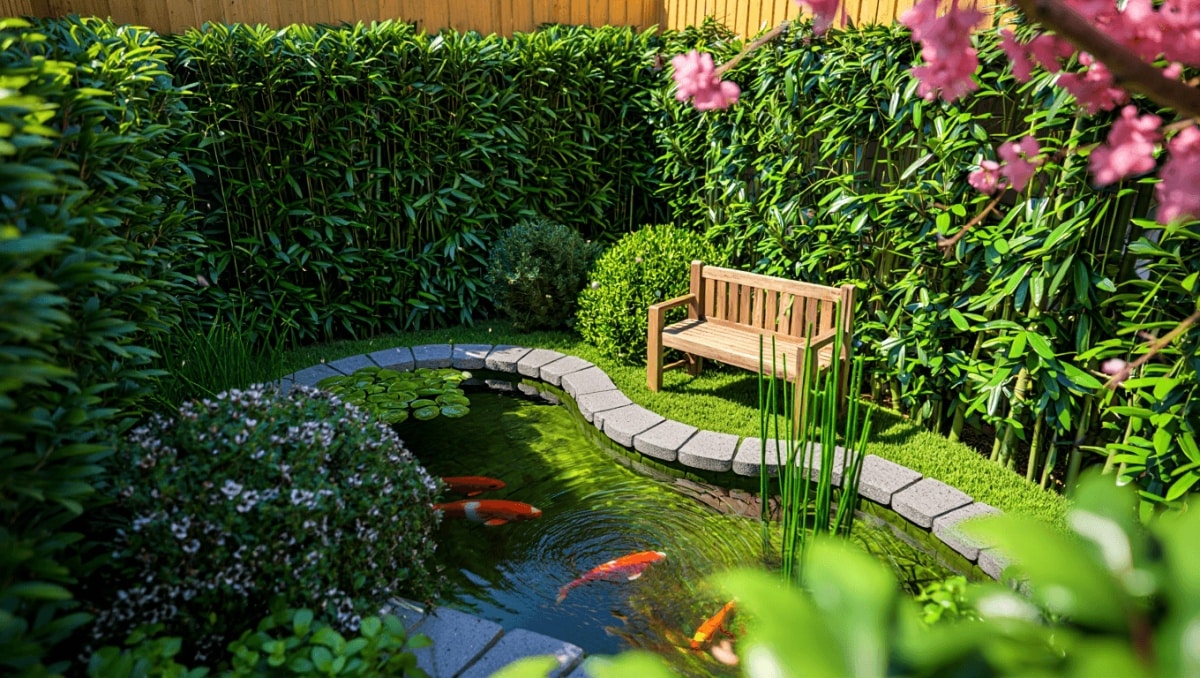
- Still ponds or basins create a reflective void that reads as calm, empty space.
- Flowing features, like a small bamboo spout, introduce sound and movement that lengthen the experience.
- When plumbing is impossible, install a small Zen rock garden—karesansui—or a sweep of raked gravel. These abstract elements invite contemplation and suggest breadth.
Plant choices, color, and privacy to frame a peaceful yard
Color and spacing matter more than plant variety. Japanese practice favors restraint to enhance perception.
- Choose calming, often monochrome palettes—greens, muted blues, gray foliage. Fewer competing colors let forms stand out.
- Space plants with intention. Gaps allow air and light to move, which boosts the feeling of openness.
- Use screens, fences, or hedges to separate the garden from busy surroundings. A framed interior reads as a private, larger room.
A simple weekend plan to make your yard feel bigger
- Pick one focal object: a stone, lantern, or basin.
- Partially hide that focal point behind a low plant or screen to create curiosity.
- Add a narrow path or irregular stepping stones that taper away from the viewing spot.
- Plant in clusters with breathing room. Favor muted greens and textures over bold, clashing colors.
- Introduce a small water element or a gravel patch as a dry substitute.
- Install a privacy screen or fence to frame the space and reduce outside noise.
Lessons from Kyoto for small-space gardeners
Living and studying gardens in Kyoto reveals one constant: restraint increases impact. The goal isn’t to fill space but to choreograph attention. That choreography makes a yard feel larger, calmer, and more engaging.










