
Show summary Hide summary
Weeds can take over a patio crack or a flower bed faster than you expect. Before you reach for a commercial herbicide, know that simple kitchen ingredients can do the job. Gardeners and extension services agree: with the right mix and timing, a homemade spray can control many unwanted plants while avoiding harsher chemicals.
Why vinegar is an effective DIY weed killer
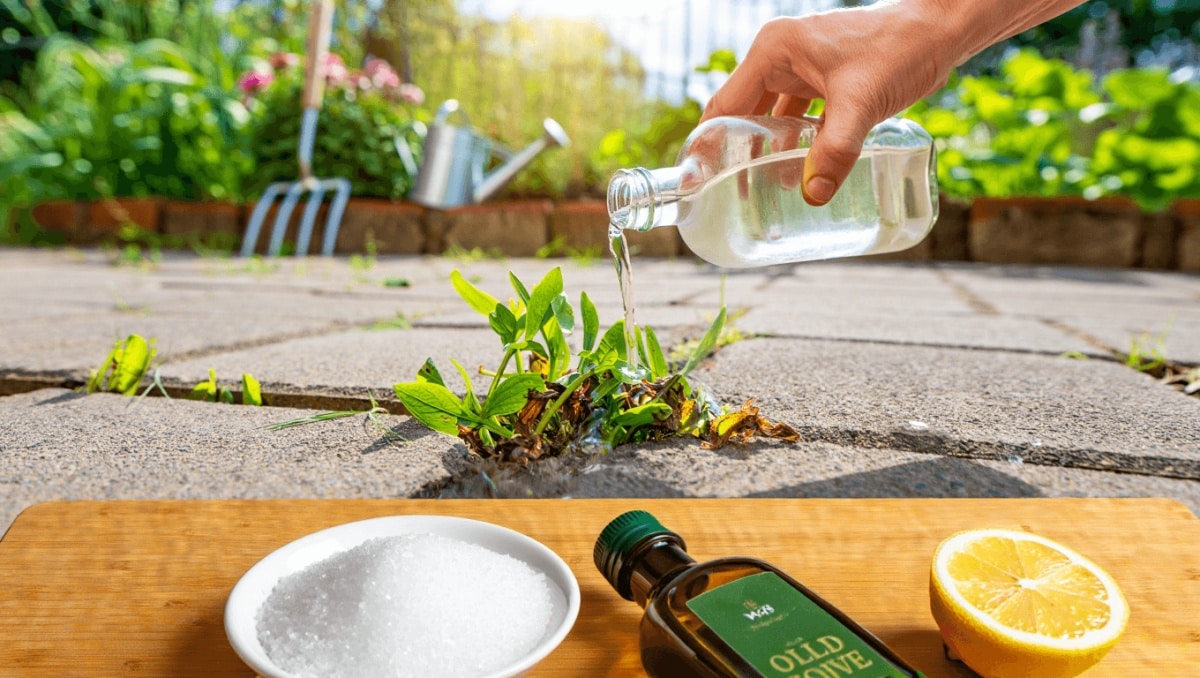
Vinegar contains acetic acid, which damages plant tissue on contact. That acid breaks down leaf cells and causes foliage to collapse. Vinegar works as a contact herbicide, so it kills what it touches rather than moving through the plant to the roots.
Michaels holiday finds under $25: 20 new gifts that look like $50
Target wall-mounted find frees up countertop space: timeless style for small kitchens
Typical household vinegar is about 5% acetic acid and will kill young or tender weeds. Tough, established plants or grasses may survive a single application. For persistent growth, gardeners either repeat treatments or use stronger, commercial-strength vinegars.
Create a safe, sticky vinegar spray
Adding a mild soap makes the solution cling to leaves and increases effectiveness. The soap lowers surface tension so the vinegar stays on the plant instead of running off.
Basic recipe
- 1 gallon of 5% white vinegar
- 1 cup plant-based Castile soap
Combine the two and pour into a pump sprayer. Spray only the weeds, coating leaves thoroughly. The soap helps the acid adhere and improves kill rates on broadleaf weeds.
Optional additives and strong warnings
Gardeners sometimes add table salt to speed up drying. Salt can desiccate plants and soil, but it also has long-term downsides. Do not use salt in garden beds. It can sterilize soil and harm beneficial organisms.
If household vinegar fails, there are horticultural vinegars with 20–30% acetic acid available for sale. These are much more corrosive.
- Use protective eyewear and gloves with high-strength vinegar.
- Handle concentrated vinegar as you would a chemical: avoid skin contact and inhalation.
When to spray for the best results
Early application is key. Target weeds as soon as they unfurl their first leaves. Young plants with broad leaves respond best to a vinegar spray.
Grassy weeds and narrow-leaf species are harder to control because less surface area contacts the spray. If plants look dead above ground, roots may still be viable. Plan follow-up applications when you see regrowth.
Timing and conditions
- Spray on a dry, sunny day for faster leaf burn.
- Avoid spraying before rain; the solution will wash off.
- Do not spray windy days to prevent drift onto desirable plants.
Where to use vinegar solutions safely
Vinegar is best for paved areas, walkways, and cracks where you want permanent suppression. For planting beds and lawns, use extreme caution.
- Avoid spraying directly on or near flowers, vegetables, and shrubs.
- Protect ornamental plants by misting the air around them, not their foliage.
- If you must treat weeds near desirable plants, use a shielded spray or a small brush to apply the mixture precisely.
Practical steps for applying your DIY weed control
- Wear gloves and eye protection, especially with stronger vinegar.
- Fill a sprayer with the soap-and-vinegar mix and test on a single weed first.
- Spray leaves until wet but avoid runoff into soil if you’re treating beds.
- Wait 3–7 days to evaluate results and reapply if green shoots return.
When to consider commercial options
If repeated home treatments fail, look for labeled herbicides or professional-strength vinegar sold for weed control. These products can be effective but require more care and proper protective equipment.
Always read product labels and follow local regulations for pesticide use. Mistakes with concentrated solutions can damage nearby plants and pose health risks.










