
Show summary Hide summary
- How often you should change lawn mower oil — real-world guidance
- Special cases: new engines and two-stroke machines
- Signs that mean you should change the oil sooner
- Fast, practical methods to drain and refill mower oil
- Choosing the right oil and setting the correct level
- Tools, supplies, and how to dispose of used oil responsibly
Regular oil care is one of the quickest ways to protect a gas mower and avoid costly repairs. A few simple checks and an occasional oil change keep the engine running cool and smooth. Read on to learn timing, step-by-step methods, and practical tips for a cleaner, faster oil change.
How often you should change lawn mower oil — real-world guidance
Michaels holiday finds under $25: 20 new gifts that look like $50
Target wall-mounted find frees up countertop space: timeless style for small kitchens
Most small four-stroke mower engines follow a time-based schedule rather than miles. Use run time in hours to track service intervals.

- Push mowers: about every 50 hours of operation.
- Riding mowers: typically every 50 to 100 hours, depending on load and conditions.
If you cut weekly and spend roughly two hours per session, one oil change per season usually suffices. Heavier use—or servicing multiple properties—means more frequent changes. Always consult the engine manual for manufacturer recommendations.
Special cases: new engines and two-stroke machines
New engines shed tiny metal particles during the first few hours. For this reason, many manufacturers ask owners to change oil much earlier during break-in.
- First oil change for a new mower: after about 5 hours of run time.
- Second change: around 25 hours, then revert to the standard interval.
- Two-stroke engines: these mix oil with the fuel, so there is no separate crankcase oil to replace.
Signs that mean you should change the oil sooner
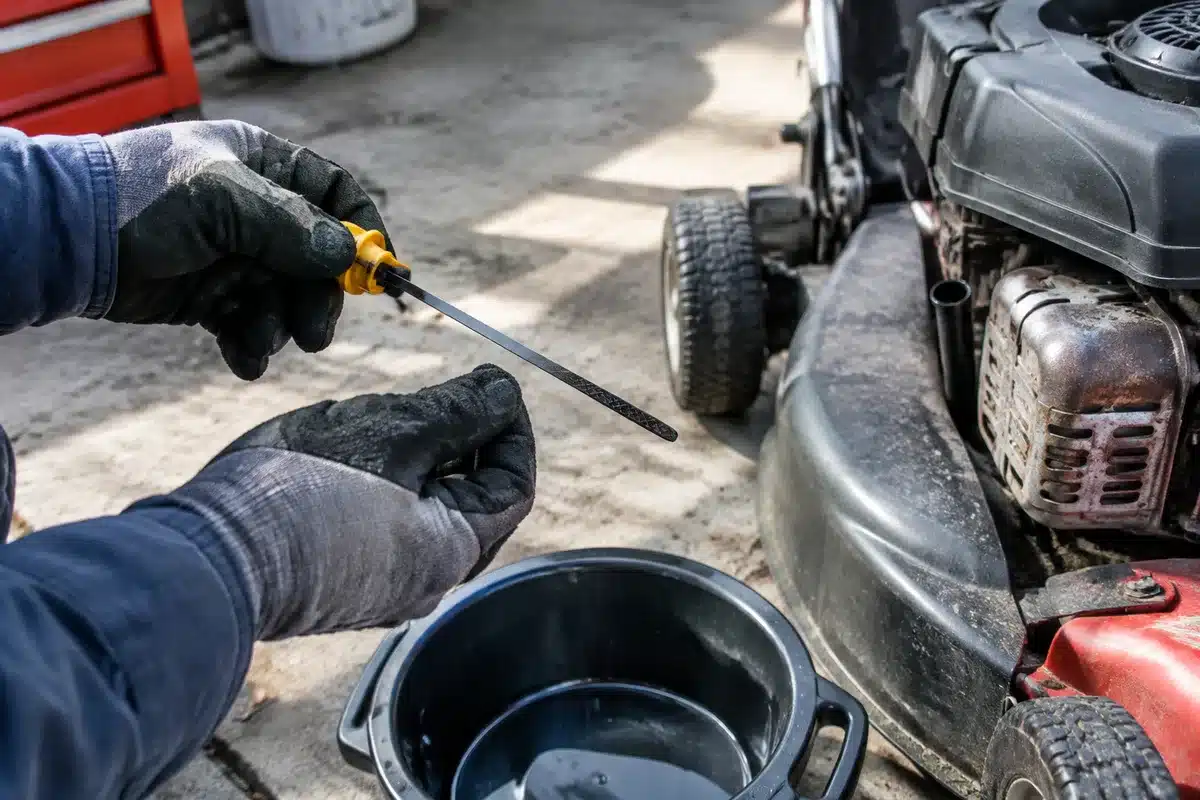
- Oil looks very dark or gritty on the dipstick.
- Engine runs hotter than normal.
- Performance drops or the mower smokes.
- Unusual noises from the valve train or bearings.
When in doubt, check the oil and the owner’s guide. Fresh oil and the correct level protect moving parts and improve longevity.
Fast, practical methods to drain and refill mower oil
Choose the method that fits your mower and workspace. Each option has pros and cons for cleanliness and speed.

Drain plug method — clean and least messy
- Warm the engine briefly to thin the oil.
- Shut off the engine and disconnect the spark plug for safety.
- Place a container under the drain and remove the drain bolt.
- Allow oil to flow out completely, then reinstall the plug.
- Fill with the correct oil, check level, and replace the dipstick.
Hand siphon pump — tidy, low lift effort
- Insert the suction tube into the oil fill opening and the outlet into a waste container.
- Pump the siphon until oil transfers.
- Top up with fresh oil and verify level.
A siphon reduces the need to tilt the mower and limits spillage.
Tilt method — when other options aren’t available
- Drain fuel or run the carburetor dry to avoid fuel leaks.
- Lay the mower on its side with the air filter and carburetor facing up.
- Pour the oil into a container via the dipstick hole.
- Stand the mower back up, replace oil, and inspect for leaks.
This method can be messy and carries a fuel-spill risk. Use only when necessary.
Choosing the right oil and setting the correct level
Oil type varies by climate and engine design. Check the manual for the recommended grade and capacity.
- Common choices: SAE 30 for warm climates; 10W-30 multigrade for variable temps.
- Synthetic blends can improve protection in some engines.
- Never overfill. Use the dipstick to monitor levels while adding oil.
After refilling, run the mower briefly, shut it down, then recheck the level. A final adjustment ensures proper pressure and lubrication at startup.
Tools, supplies, and how to dispose of used oil responsibly
- Basic tools: wrench for the drain plug, oil pan, funnel, clean rags, and gloves.
- Optional: manual oil pump or a small cordless pump for speed and cleanliness.
- Have absorbent material on hand for spills.
Used motor oil is recyclable. Take the old oil to a local recycling center, an auto parts store, or a municipal hazardous-waste collection site. Never dump oil on the ground or into storm drains.










