
Show summary Hide summary
- How plastic wrap boosts cleaning and why it works for glass shower doors
- Materials you will need for the wrap-and-soak method
- Step-by-step: cleaning glass shower doors with vinegar, paper towels, and plastic wrap
- Using bleach or baking soda safely on grout and caulk
- Other bathroom fixes that benefit from wrap-and-soak
- Finishing touches and routine maintenance to keep doors clear
- Safety reminders and common pitfalls to avoid
Cloudy shower glass, stubborn mineral rings, and streaks that won’t budge are a common bathroom annoyance. A surprisingly simple trick — soaking the glass with a cleaning solution then sealing it with plastic wrap — speeds up stain removal and cuts the elbow grease. It’s cheap, low-effort, and uses household ingredients like vinegar or baking soda to revive foggy doors.
How plastic wrap boosts cleaning and why it works for glass shower doors
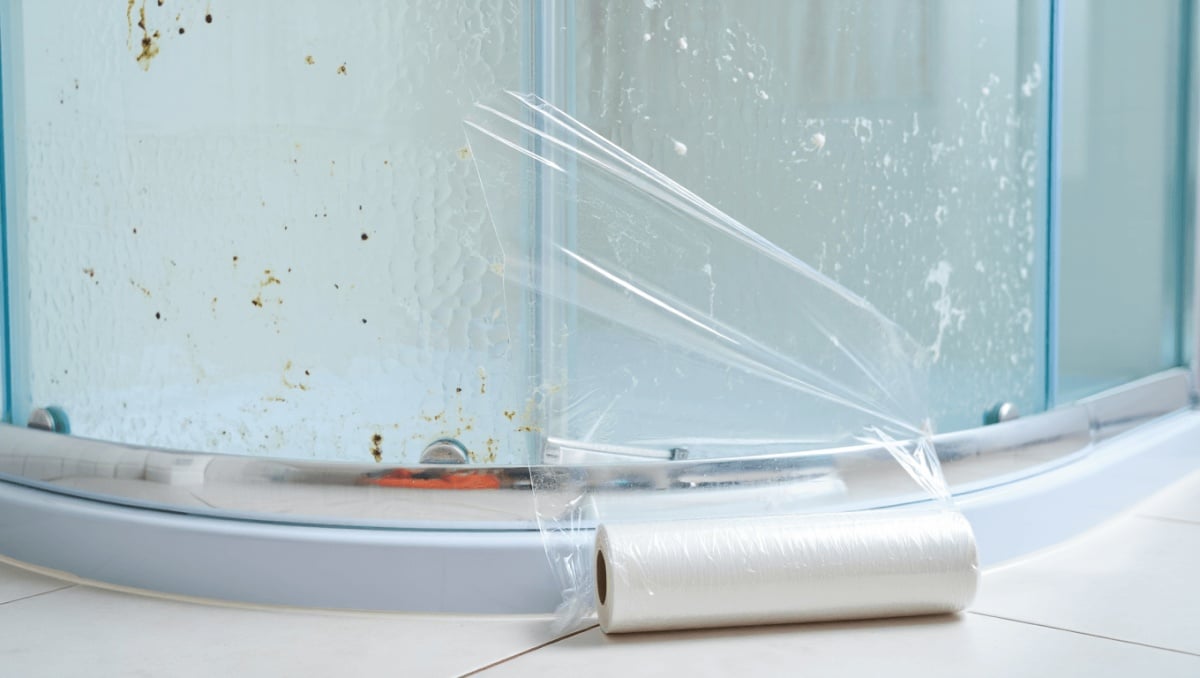
Plastic wrap creates a sealed micro-environment on the glass. That keeps your cleaning solution from evaporating. It lets acids or detergents work longer on mineral deposits.
Michaels holiday finds under $25: 20 new gifts that look like $50
Target wall-mounted find frees up countertop space: timeless style for small kitchens
- Prevents drying: The wrap locks in moisture so the cleaner stays active.
- Reduces reapplication: You won’t need to keep spraying to maintain contact.
- For many stains, longer contact time means less scrubbing later.
Materials you will need for the wrap-and-soak method
Gather items before you start. This saves trips in and out of the bathroom and keeps the process efficient.
- White vinegar or a commercial glass cleaner
- Plastic wrap wide enough for the panels
- Paper towels or microfiber cloths
- Gloves and eye protection if you use bleach
- A squeegee or non-abrasive scrub pad for finishing
Step-by-step: cleaning glass shower doors with vinegar, paper towels, and plastic wrap
- Spray the glass evenly with white vinegar. Use full-strength for hard water spots.
- Press paper towels onto the wet glass. Continue spraying until each towel is soaked.
- Cover the towels and glass with plastic wrap. Smooth the wrap so it seals to the edges.
- Leave the wrap in place for at least 30 minutes. For heavy buildup, allow up to 1 hour.
- Remove the wrap, discard the paper towels, and wipe the surface with a damp cloth.
- Use a squeegee or soft pad to remove any remaining residue. Rinse with water.
Timing and tweaks
Shorter times work for light film. Older, mineral-rich stains need longer soak time. Repeat the process if needed.
Using bleach or baking soda safely on grout and caulk
The wrap technique also helps grout and caulk cleaners stay wet and effective. For mold or deep discoloration, people sometimes use bleach or a baking soda paste.
- If you use bleach: Limit contact to 30 minutes maximum to avoid damaging surfaces.
- Ensure the bathroom is well ventilated. Open windows and run an exhaust fan.
- Wear gloves and avoid mixing bleach with vinegar or ammonia.
- Rinse thoroughly after treatment to remove residue.
Other bathroom fixes that benefit from wrap-and-soak
This simple barrier helps more than just shower glass. Try it on these problem areas:
- Grimy grout lines: Apply a baking soda paste, wrap, and let it work before scrubbing.
- Caulk stains: Use a bleach solution wrapped for a short period for whitening.
- Mineral-clogged shower heads: Submerge the head in vinegar or bag it with vinegar and wrap.
Finishing touches and routine maintenance to keep doors clear
After the heavy lifting, small habits preserve results. Wiping doors after each use cuts mineral buildup. A quick squeegee swipe takes seconds and prevents future stains.
- Dry tracks and seals to prevent mold growth.
- Use a water-repellent product occasionally for added protection.
- Address soap scum where it starts, rather than waiting for thick deposits.
Safety reminders and common pitfalls to avoid
Keep safety top of mind when mixing cleaners or using strong chemicals.
- Never mix bleach with vinegar or ammonia — toxic gas can form.
- If a strong chemical smell lingers, ventilate the room and rinse surfaces well.
- Test any cleaning mix on a small, hidden area first.
- Use protective gloves and eyewear when handling concentrated solutions.










