
Show summary Hide summary
Lemon trees reward careful hands with heavy, tangy harvests. A smart pruning routine improves light, airflow, and the tree’s energy balance. That work often means more fruit and a healthier tree, whether it’s in your backyard or a sunny pot on the patio.
How pruning directly increases lemon yield
Pruning is more than trimming branches for looks. It redirects resources to the best fruiting wood. It also reduces disease risk and helps sunlight reach interior buds.
Michaels holiday finds under $25: 20 new gifts that look like $50
Target wall-mounted find frees up countertop space: timeless style for small kitchens
- Better light penetration: Thinning the canopy allows more sunlight to reach fruiting sites.
- Improved airflow: Open structure cuts fungal pressure and slows pests.
- Energy focus: Removing weak or competing shoots channels sugars into flowers and fruit.
- Manageable size: You can keep trees smaller for easier harvest and better backyard fit.
Best windows in the year to prune lemon trees
Timing is critical. Prune when the tree is not actively growing but after the risk of hard freezes has passed.
- Outdoor trees in warm regions (USDA zones 9–11): prune from February through early April.
- Indoor or cold-climate trees: prune between late February and March.
- Avoid pruning in fall or midsummer. Cuts made then can trigger tender growth or scorch the exposed wood.
Never remove more than a third of the canopy at once. Removing too much stresses the tree and reduces fruit set.
Step-by-step pruning guide for thriving lemon trees
- Start by removing dead, damaged, or diseased wood. Cut back to healthy tissue or the branch collar.
- Eliminate crossing or inward-growing branches that rub or block light.
- Shorten leggy leaders to encourage lateral branching and more flowering sites.
- Remove basal shoots and water sprouts at the trunk; pull by hand or cut flush at the root crown.
- Thin crowded areas so branches sit 6–12 inches apart, depending on tree size.
- Step back and review from all sides. Make additional small cuts rather than large removals.
Tip: Always cut at a slight angle and just above a healthy outward-facing bud to direct new growth away from the center.
Tools, sanitation, and safety
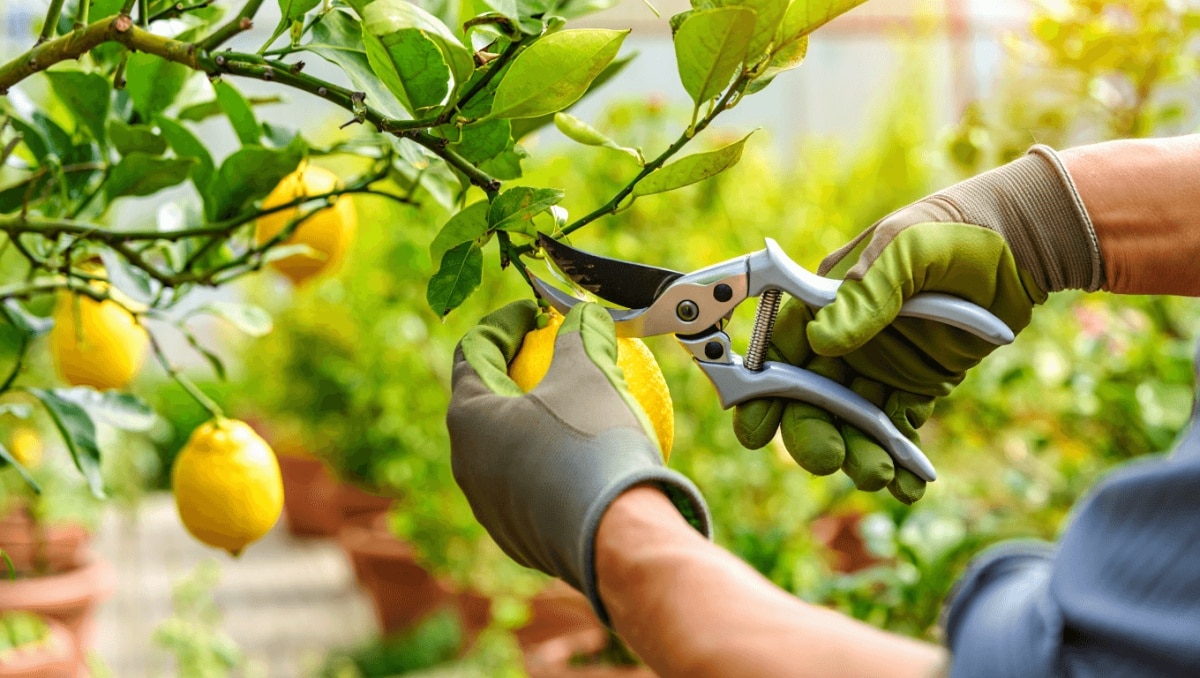
- Use sharp bypass pruners for small branches and a pruning saw for thicker limbs.
- Disinfect tools between cuts when removing diseased wood. A 70% isopropyl alcohol wipe works well.
- Wear eye protection and sturdy gloves. Stand clear of falling branches.
Different approaches for young and mature lemon trees
Young trees benefit from formative pruning. Mature trees need maintenance pruning to sustain productivity.
- Young trees: Train three to five scaffold branches to create a balanced framework. Remove competing leaders.
- Mature trees: Focus on thinning and removing dead wood. Keep canopy open without heavy reduction.
Pruning potted lemon trees and small-space methods
Container-grown citrus need gentler, more frequent pruning. Pots limit root volume and carbohydrate reserves.
- Prune lightly each year to maintain shape and airflow.
- Remove root-bound stress first by repotting when necessary before doing heavy pruning.
- Consider espalier or espalier-style training to maximize fruiting on a wall or fence.
Signs you should prune sooner
- Branch dieback after frost or storm damage.
- Dense inner canopy with little light or many crossing limbs.
- Excessive water sprouts or suckers stealing energy from fruiting wood.
Common mistakes to avoid when pruning lemons
- Pruning during heat waves or just before a freeze.
- Removing more than 30% of the canopy at once.
- Leaving stubs instead of cutting to a bud or branch collar.
- Failing to disinfect tools after cutting diseased wood.
After pruning care
Water well and apply a balanced fertilizer in spring to support new growth. Monitor for pests or disease around fresh cuts. Mulch to conserve moisture and feed roots.










