Show summary Hide summary
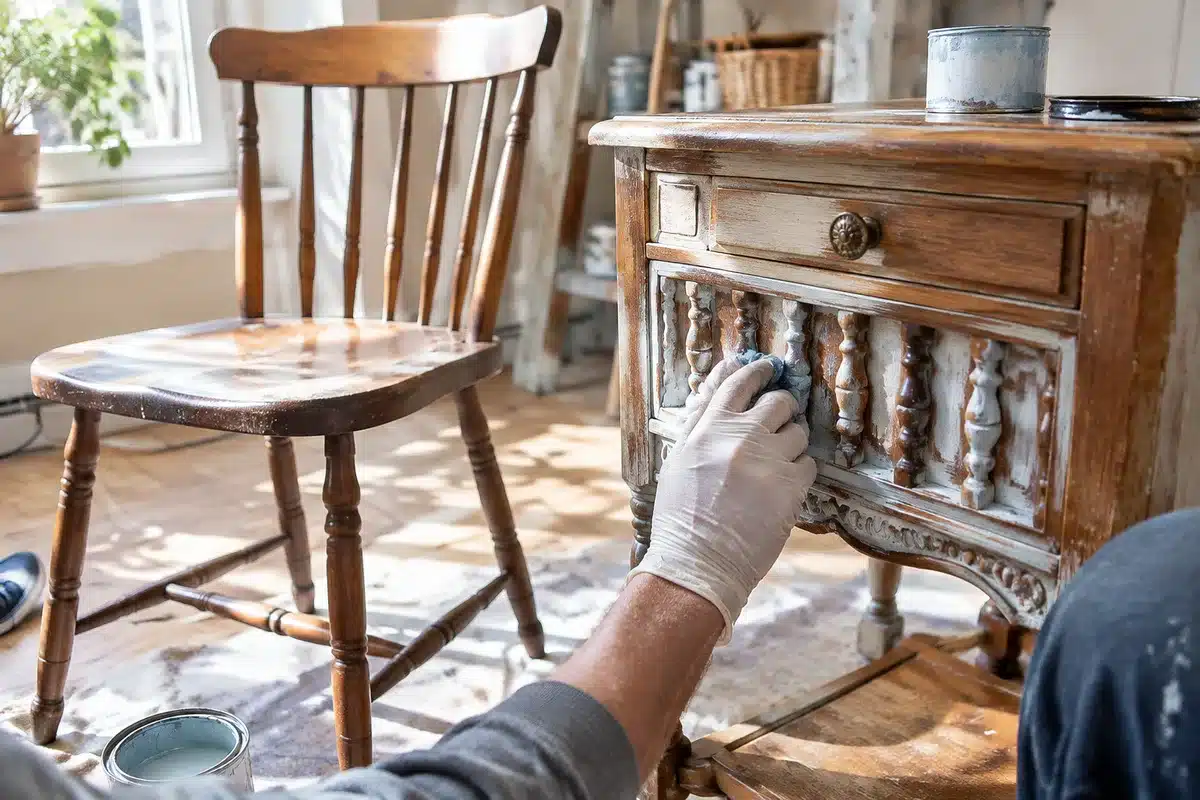
Thrifted chairs and ornate bedside tables often hide in plain sight until you imagine them freshened with a new coat of paint. A simple, low-cost hack from DIY communities swaps brushes for socks to reach tight spindles and carved details without drips or heavy brush marks. The method is surprisingly effective, accessible, and kinder to tricky shapes than a stiff paintbrush.
Why a sock can be a better tool for painting thrifted furniture
Thrifted furniture paint hack: use socks, skip the brushes
’50s wall art style is back: why vintage prints are dominating homes
Socks conform to curves and absorb paint differently than bristles. That flexibility helps the fabric press paint evenly into recesses and around delicate molding. When the goal is a uniform coat without visible brush strokes, a sock can diffuse paint and create a soft, consistent finish.
Use this approach for:
- Spindles and chair legs
- Ornate cabinet doors and railings
- Curved or rounded tabletops
- Stain applications on wood details
Step-by-step: How to paint furniture with a sock
- Pick the right sock. Crew socks that reach past the wrist work best. Choose a clean, low-lint sock.
- Protect your hand. Put on a disposable glove, then pull the sock over it to form a padded applicator.
- Load paint carefully. Dip your gloved fingers into a paint tray to wet the toe of the sock and the palm area.
- Remove excess. Lightly wipe or dab on a tray or cardboard to stop drips before touching the surface.
- Apply with control. Rub or blot the paint against the furniture, moving with the grain when possible.
- Layer thin coats. Let each coat dry fully before adding another to avoid pooling and streaks.
Tip: Work in small sections so the paint doesn’t skin over before you smooth it with the sock.
Practical tips to prevent lint, streaks, and over-absorption
- Test fabrics first. Different sock materials behave differently. Cotton blends are usually easier to control.
- Use new socks for a lint-free result, or wash and dry the socks first to reduce shedding.
- Switch socks if they become saturated. A soggy applicator creates uneven coverage.
- Keep a lint roller or painter’s tape handy to pick up stray fibers before painting.
- For very smooth finishes, finish with a light sanding between coats using fine-grit sandpaper.
If you see streaks: try a different sock material and thin your paint slightly according to the manufacturer’s instructions.
Where this sock method excels — and when to choose a brush instead
The sock technique shines on 3D details and rounded profiles that frustrate ordinary brushes. It’s a good option for stains as well as paints, because the fabric pushes color into grooves gently.
Best uses
- Stair bannisters and spindles
- Chair rungs and decorative trims
- Radiator pipes and odd-shaped metalwork
When to use a brush or roller
- Large, flat surfaces that need a perfectly smooth factory look
- Fine detail work where a steady line is crucial
- Projects requiring a textured finish that only a brush or roller can provide
Remember: The sock hack is a practical alternative, not an absolute replacement for traditional tools.