
Show summary Hide summary
- How the shop-vac blow method actually works to unclog a bathtub
- Step-by-step guide: Using a shop vac to blast a slow-draining tub
- Real responses from people who tried the method
- Practical tips to improve success and avoid common pitfalls
- Safety concerns and limitations to keep in mind
- Tools and products that offer similar results
- Community-sourced tweaks and clever fixes from DIYers
A simple shop-vac trick demonstrated by a DIYer on YouTube has caught attention for clearing slow bathtub drains quickly and cheaply. The method flips the usual approach: instead of only trying to suck debris out, the repairer uses forced air to dislodge the clog. Viewers who tried it report real results, and the technique points to an affordable middle ground between plungers and calling a plumber.
How the shop-vac blow method actually works to unclog a bathtub
The idea is straightforward yet effective. Most household clogs are made of hair, soap scum and residue. First, loosen that buildup with a drain snake or similar tool. Then use a wet/dry vacuum set to blow to push the loosened material through the trap.
Michaels holiday finds under $25: 20 new gifts that look like $50
Target wall-mounted find frees up countertop space: timeless style for small kitchens
- Loosen the clog first. Snaking breaks up the mass so air can move it.
- Seal the overflow. Closing the overflow creates pressure in the drain line.
- Use a wet/dry vacuum. These units are designed to handle moisture and debris.
- Reverse the vacuum to blow. The outward blast can force the clog past the trap.
Step-by-step guide: Using a shop vac to blast a slow-draining tub
- Gather tools: wet/dry vacuum, drain snake, rag or small plug, utility knife, optional adapter.
- Remove visible debris from the drain grate and run a snake a few inches into the pipe.
- Open the tub overflow and stuff it with a rag or plastic bag to block air escape.
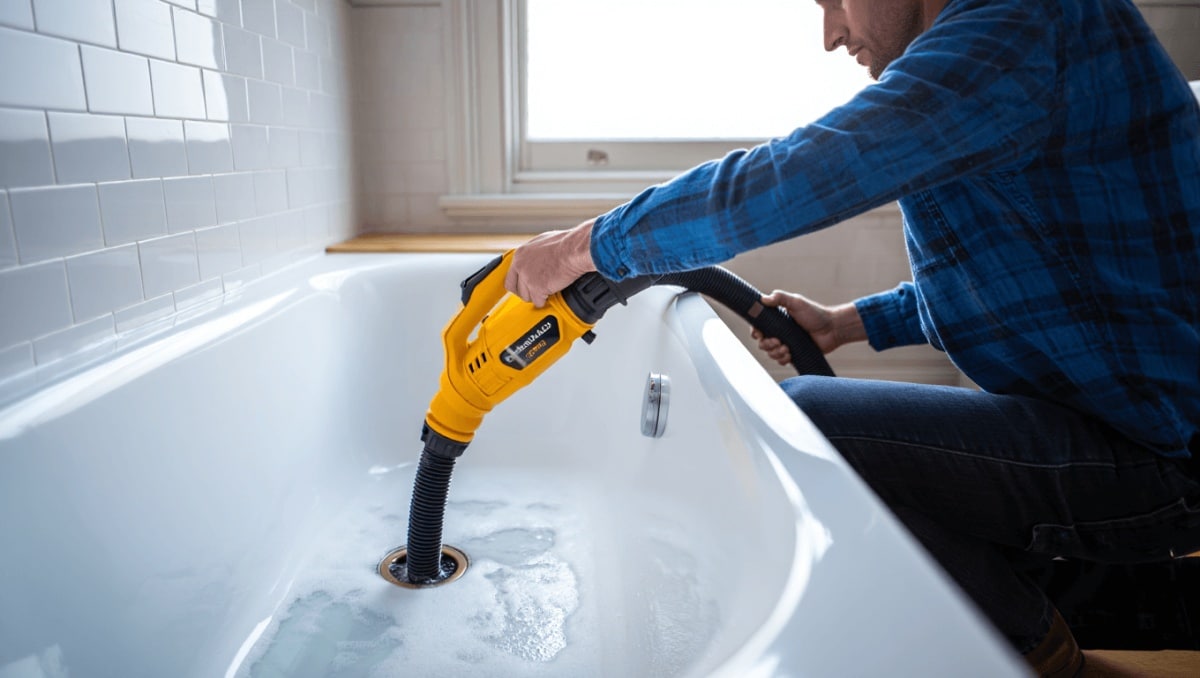
- Modify the vacuum nozzle if needed so it fits snugly over the tub drain opening.
- Switch the vacuum to the blow or blower mode and direct air into the drain for several seconds.
- Alternate suction and blowing if residue remains, then run hot water to clear anything left.
Why each step matters
- Snaking loosens compacted hair and scum so the air can move it.
- Sealing the overflow prevents the air from escaping and builds pressure in the plumbing.
- A tight nozzle connection focuses airflow into the trap rather than dissipating in the tub.
Real responses from people who tried the method
Online reactions were largely positive. Many viewers said the technique unclogged their tubs after plungers and snaking failed. Some bought a wet/dry vacuum for this purpose because it cost less than a service call.
- Users reported rapid results after a single blow cycle.
- A few commented they still needed a plumber when clogs were deeper than the trap.
- Several suggested switching between blow and suction to both dislodge and extract debris.
Practical tips to improve success and avoid common pitfalls
- Test depth first. If you can’t feel the clog with a snake, the blockage may be out of reach for a vacuum blast.
- Seal properly. Use a rag, plug or tape to block the overflow and reduce air leaks.
- Modify the nozzle carefully. Trim an adapter so the shop-vac hose fits tightly over the drain. A snug fit concentrates pressure.
- Use a wet/dry model. Regular household vacuums can be damaged by moisture or debris.
- Alternate modes. Using suction after blowing can recover items or pull loosened gunk out.
- Wear protection. Gloves and eye protection protect you from spray and detached debris.
Safety concerns and limitations to keep in mind
- Not a cure-all. If the clog sits deep in the line, blowing may only push air into vents or downstream fixtures.
- Blowing air into a vent stack or toilet can force sewage odors or risks into your home.
- Improper sealing of the overflow will waste pressure and reduce effectiveness.
- Do not use high-pressure air without proper fittings. Shop vac blow mode is safer than compressed-air tools for this job.
Tools and products that offer similar results
Several commercial devices use the same principle of delivering a burst of air to clear drains. They target toilets, condensate lines and sometimes sinks and tubs.
- Manual kinetic air drain blasters—hand-pumped units that send a strong pulse of air.
- CO2 cartridge drain blasters—single-use cartridges that create a rapid burst.
- Shop-Vac universal adapters—small sleeves that help fit nozzles to odd drain sizes.
- Wet/dry vacuums—your best multi-use option for both suction and blowing.
Community-sourced tweaks and clever fixes from DIYers
People online suggested practical variations worth trying. Some are low-tech, others require a bit of planning.
- Alternate between blowing and suction to move and then remove debris.
- Seal the overflow with duct tape when a rag won’t hold; be ready to remove residue later.
- Use hot water after the process to dissolve soap scum and flush remaining particles.
- If the overflow screws prove stubborn, pressing a damp cloth into the hole can work as a temporary seal.










