Show summary Hide summary
Mowing every week can keep a lawn looking tidy, but the difference between a good cut and a great one is often a sharp, undamaged blade. Homeowners ask the same question each season: how soon should I replace lawn mower blades? The practical answer varies. Weather, lawn size, grass type and how often you mow all change the math.
When to plan a blade replacement: a simple guideline
Oil stains gone: kitchen staple keeps driveway spotless
Zero-turn mower blades: ditch the metal file and sharpen faster
For many turf-care pros and extension services, blade replacement is an annual task. That rule fits most homeowners with typical yards and seasonal mowing. Still, the one-year mark is a baseline, not a mandate.
- High-frequency mowing: If you cut twice a week or more, blades wear faster.
- Large lawns: More square footage equals more hours on the blade.
- Aggressive grass types: Fast-growing, coarse grasses need sharper blades.
- Terrain and debris: Rocky yards or hidden sticks speed up wear and cause damage.
Adjust the plan to match your conditions. Some homeowners replace blades sooner. Others get more than a year from a blade by sharpening and rotating use.
How to spot a blade that needs replacing right now
A visual check and a listen can tell you a lot. Look for visible damage and pay attention to how grass looks after a pass.

- Grass comes out ragged, torn, or browned at the tips.
- The mower makes clunking or vibration you don’t usually hear.
- The blade has obvious bends, deep nicks, dents, or cracks.
- Repeated sharpenings have removed a lot of metal or changed the blade profile.
Torn grass and discoloration often mean a dull blade. But deep cracks or a bent blade are safety risks. In those cases, replacement is the safest choice.
Sharpen or replace: practical rules for decision-making
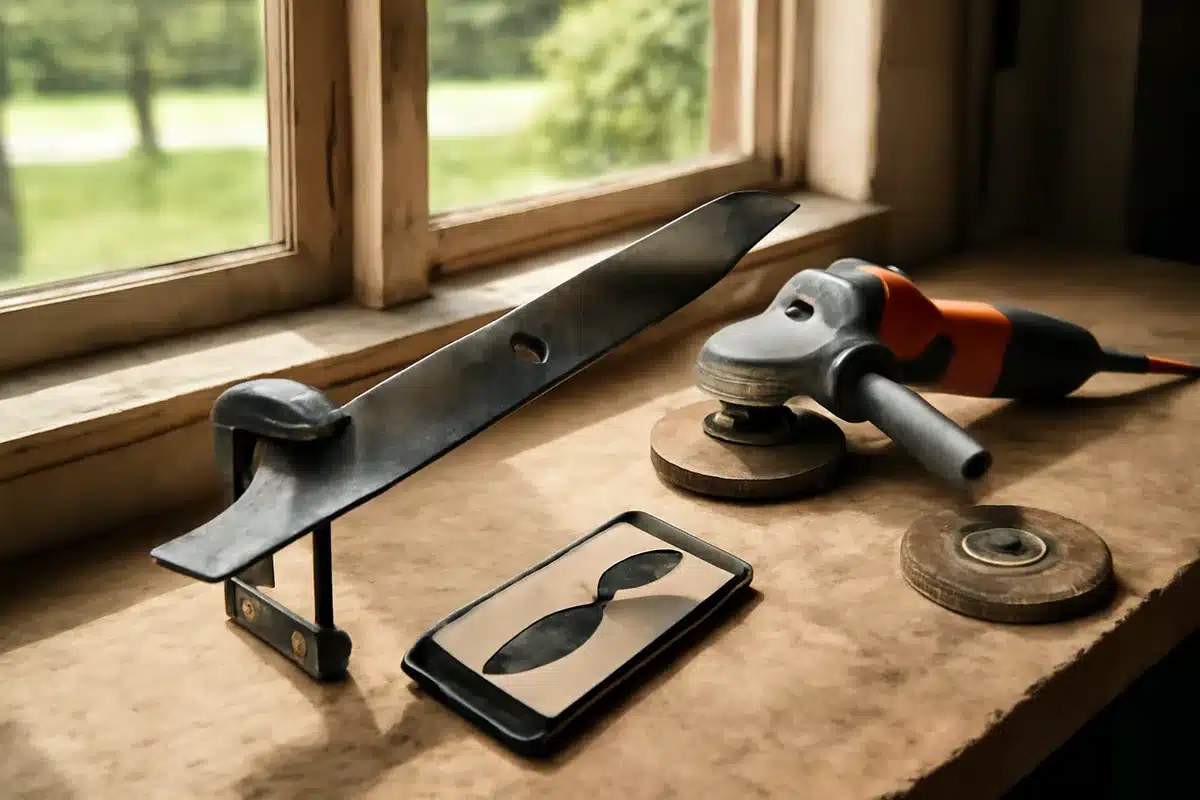
Not every dull blade needs replacement. Sharpening is cheaper and restores cutting performance when the blade is structurally sound.
- Sharpen when the edge is dull but the blade is intact.
- Replace when you see cracks, missing chunks, severe bends, or when repeated sharpening shortens the blade too much.
- Balance the blade after sharpening. An unbalanced blade vibrates and stresses the mower.
Signs sharpening is enough
- No structural damage visible.
- Only minor nicks along the edge.
- Blade thickness is still normal after several sharpenings.
When to buy a new blade
- Hairline or full cracks anywhere on the blade.
- Major bends that won’t straighten safely.
- Missing metal from the cutting surface or mounting area.
Maintenance steps that lengthen blade life
Routine care reduces how often you replace blades and improves lawn appearance.

- Clean the underdeck after each use to remove wet clippings and dirt.
- Check the blade for damage monthly during the season.
- Sharpen as needed; many homeowners do this once per growing season at minimum.
- Rotate blades if you have a backup set to spread wear.
- Always disconnect the spark plug before inspecting or removing blades for safety.
Balanced blades cut cleaner and last longer. Use a blade balancer or take blades to a shop to verify balance after sharpening.
Professional help and safety tips
If you’re unsure about damage or proper balance, a small-engine shop can inspect and sharpen blades safely. They can also recommend the correct replacement part for your model.
- Wear gloves and eye protection when handling blades.
- Never try to straighten a cracked blade; replace it.
- Keep a spare blade on hand during peak mowing season.
Regular attention to blades improves lawn health and extends mower life. A clean, sharp blade creates neat cuts that help grass resist disease and stress.