Show summary Hide summary
Your driveway often sets the tone before guests even reach your front door. A few dark oil spots can steal curb appeal, but you don’t need harsh chemicals to restore a clean look. A simple pantry ingredient pulls double duty as an absorbent and mild alkali, making it a go-to fix for messy car drips.
How baking soda targets oil stains and grime
Ryobi vacuum under $60: top-rated, surprisingly powerful deal
Oil stains gone: kitchen staple keeps driveway spotless
Baking soda works in two practical ways on driveway stains. First, it acts like a sponge, drawing oil into its powdery crystals. Second, its mild alkalinity helps break up grease molecules. Together, these properties make baking soda a cheap, low-toxicity option for outdoor cleaning.

- Absorption: Powder soaks up fresh spills.
- Degreasing action: Mild chemical lift for set-in grease.
- Safe on most surfaces: Gentle on concrete and pavers when used properly.
Clear steps to remove fresh and old oil marks
Cleaning fresh spills
- Blot excess liquid with paper towels or rags.
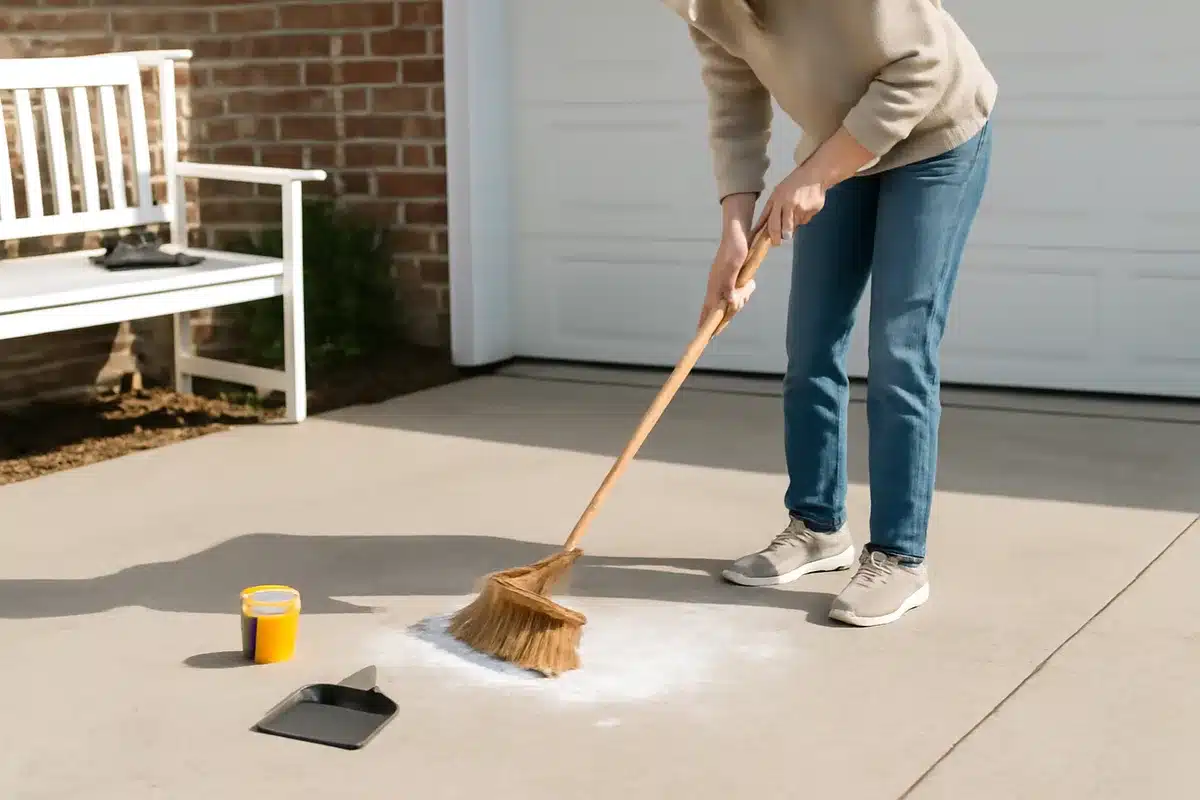
- Sprinkle a generous layer of baking soda directly over the wet stain.
- Let it sit for at least 30 minutes to absorb oil.
- Brush away the powder and rinse with a hose.
- Repeat if the mark persists.
Tackling older, stubborn stains
- Make a thick paste: start with baking soda, add a little water. Aim for a doughy texture.
- Smear the paste over the entire stained area, covering the edges.
- Allow the paste to rest for 30 to 60 minutes; longer for deep stains.
- Use a stiff-bristle brush to scrub the paste into the surface.
- Rinse thoroughly and inspect the spot after it dries.
- Apply a second treatment if needed.

Recommended tools, timing, and safety advice
Using the right kit speeds the job and protects surfaces. Keep these items on hand:
- Stiff-bristle brush or broom
- Gloves and eye protection
- Garden hose or pressure washer on a low setting
- Old towels or a dustpan to collect residue
Wear gloves to avoid skin irritation. Test the paste on a small area first. If you use a power washer, use a moderate pressure to avoid damaging concrete. When rinsing, channel runoff away from storm drains when possible.
Handy extras: small tips and other uses around the home
Older boxes of baking soda are still useful for cleaning tasks. Instead of tossing them, repurpose the powder for outdoor stain work. Keep in mind that replacing baking soda every six months is best for deodorizing duties inside the home.
- Sprinkle on weed growth between pavers to discourage sprouting.
- Mix with lemon or vinegar for extra cleaning power on non-porous surfaces.
- Use as a deodorizer in the garage, trash cans, and refrigerators.