Show summary Hide summary
Many households pay little attention to one of their largest energy drains: the dryer. A return to the clothesline can slash utility costs, preserve fabrics, and add fresh-air scent without chemicals. Read on for practical ways to bring this low-cost habit into a modern home.
Why hanging clothes saves money and protects fabric
Magnetic backsplash tiles let you swap your tile in minutes: instant kitchen makeover
CD cases repurposed into faux stained glass lamp: clever DIY anyone can make
Electric dryers draw a lot of power. Depending on model and cycle, they can pull between roughly 1,500 and 5,000 watts. Run several loads a week and those numbers add up to hundreds of kilowatt-hours a year.

Line drying eliminates the electricity used by a dryer, which directly reduces your monthly bill. It also softens wear on garments. Heat and aggressive tumbling break down fibers, causing shrinkage, fading, and thinning.
Sunlight and air freshen clothing naturally. That means fewer dryer sheets and fewer trips to the wash for odor control. Over time, these small savings protect your wardrobe and lower replacement costs.
Easy setups for every living situation
Not everyone has a backyard for a permanent line. Fortunately, several low-cost options work in apartments, condos, and houses.
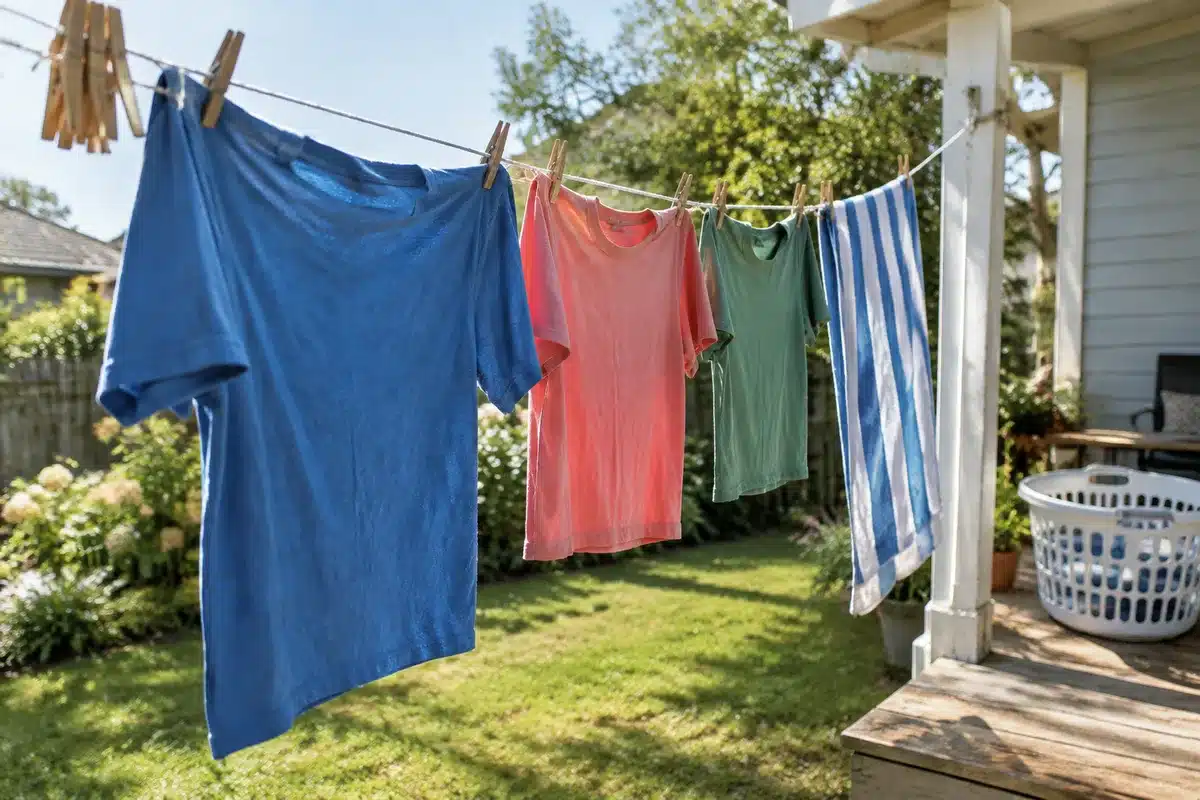
- Outdoor clothesline: Install a sturdy line between two posts or supports in a sunny, breezy spot.
- Retractable line: Folds away when not in use and works on balconies or patios.
- Freestanding drying rack: A steel or wooden rack fits inside near a window or on a balcony.
- Indoor ceiling or pulley system: Great for tight spaces and can be raised out of the way.
Choose a rust-resistant line and strong clothespins. If local rules or HOAs restrict clotheslines, a compact rack or retractable solution still offers major savings.
Practical hanging techniques to cut ironing and keep shape
Line drying correctly reduces wrinkles and helps garments keep their form. Small habits make a big difference.
- Shake garments before hanging. A brisk snap removes excess water and smooths fiber alignment.
- Hang shirts by the shoulders or on hangers to preserve the yoke and collar.
- Hang t-shirts from the bottom hem to stop shoulder stretching.
- Fasten all buttons on collared shirts to keep the front flat.
- Hang pants by the waistband or fold them over the line to avoid creases at the knees.
- Lay heavy knits and bulky sweaters flat on a rack to prevent sagging.
- Spread towels flat and avoid folding or bunching, which traps moisture.
Use clothespins near seams or hems to reduce visible pin marks. Smooth remaining wrinkles with your hands while fabric is damp to lower ironing time.
Timing, sunlight, and fabric protection
Mid-morning washing gives you the best chance to use sun and breeze. Aim to hang laundry during the first half of the day when airflow is steady.
Direct, intense sun can fade colors and stiffen natural fibers over time. For colored garments, choose shaded areas with good airflow. For whites and linens, a few hours of sunlight can help brighten them safely.
Cloudy or humid days slow drying. In those conditions, a ventilated indoor rack near a window or a small fan will speed the process without heating the air.
Small investment, measurable results for budget and planet
Initial costs are minimal: a line, anchors, and a handful of clothespins are inexpensive. A collapsible rack costs little and lasts for years.
Every load you skip in the dryer reduces electricity use and carbon emissions. Over months and years, that adds up to real savings on utility bills and fewer textile replacements.
Plus, less reliance on heat means garments keep their color and texture longer, cutting long-term clothing expenses and reducing waste.