Show summary Hide summary
Grass stuck to a mower deck is more than a nuisance. It slows blades, traps moisture and accelerates rust. Instead of repeatedly coating the deck with oil or WD-40, a durable paint or coating can create a slick surface that resists clumps and cuts down on cleaning and corrosion.
Why grass sticks and why it matters for your mower
Mower deck hack: stop grass from sticking with this simple alternative to oil and WD-40
Art Deco bathroom trend: why people are ditching white tile
When clippings build up, they alter airflow and force the engine to work harder. Moisture held against bare metal promotes oxidation. Over time, both effects shorten blade life and reduce mower performance. Removing stuck grass is messy and frequent if the deck is porous or rusted. A smooth coating helps grass slide off and keeps moisture away from the steel.

Which paints and coatings actually work
Not every paint is designed for mower decks. Look for products that form a hard, slick finish and resist moisture. Three common categories perform well:
- Moisture-curing urethanes: They bond strongly to metal and create a durable film. These often need careful application but last a long time.
- Enamel and alkyd coatings: These are widely available and easy to apply. Some formulations include additives to reduce sticking.
- Specialty non-stick sprays: Aerosol paints formulated for mower decks often contain graphite or other lubricants to repel wet grass.
Products to consider
- Rust-inhibiting urethanes like RustSeal are useful where rust is present. They create a hard, protective surface.
- Alkyd-based aerosol paints marketed as non-stick, such as a black matte mower spray, contain graphite and make application simple.
- General-purpose high-temperature enamels can work if the finish is smooth and properly prepped.
Preparing your mower for painting: the essentials
Preparation is the key to a lasting finish. Work methodically so the paint adheres and the coating performs as intended.
- Disconnect the spark plug and remove the blade for safety.
- Mask the motor, spindle, and any parts that must not be coated.
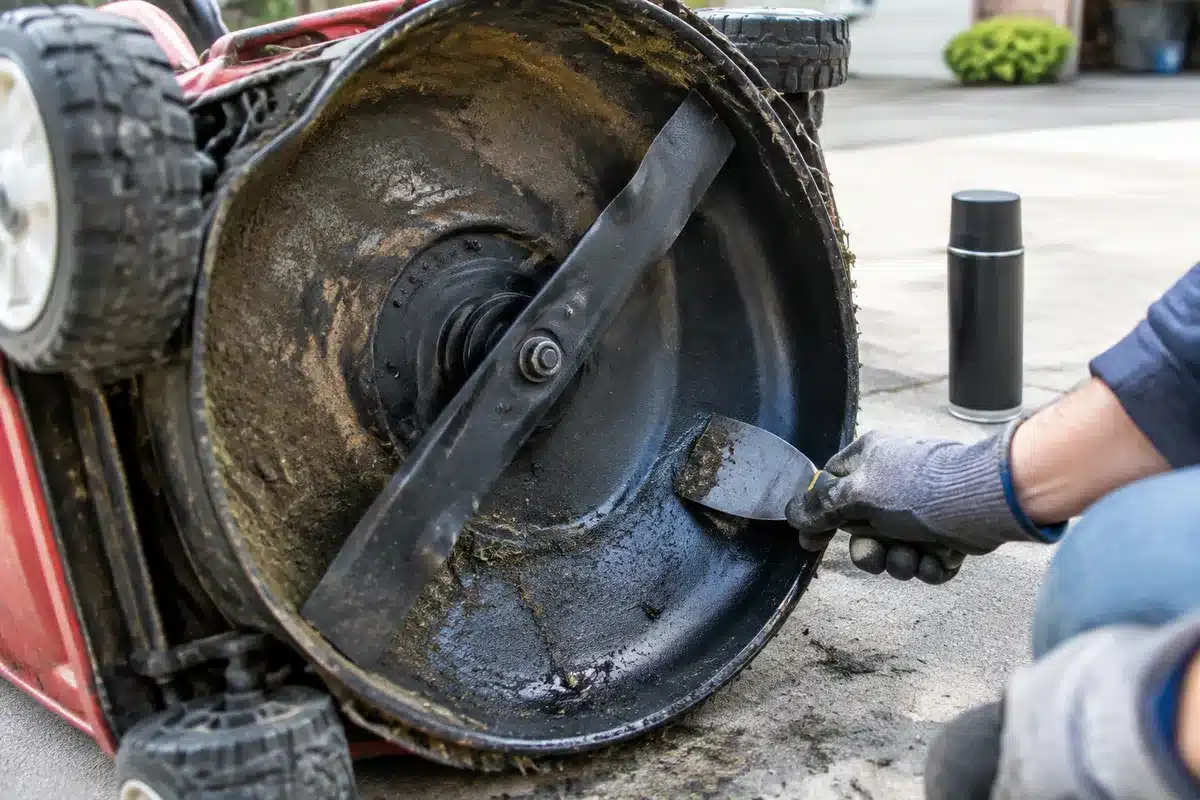
- Scrape away grass and loose paint with a putty knife or stiff scraper.
- Use a wire wheel on a drill for stubborn residue and flaking metal.
- Degrease the deck with a cleaner to remove oil and buildup. Rinse and let it dry overnight.
- If rust remains, treat it with a rust converter or a product designed to stop corrosion before painting.
How to apply the coating safely and effectively
Follow the manufacturer’s directions for mixing and thinning. Some two-part urethanes require a hardener. Work outdoors or in a well-ventilated area.
- Wear gloves and a respirator when spraying or using strong solvents.
- Apply thin, even coats. Multiple light coats bond better than one heavy coat.
- Allow the recommended flash times between coats to avoid runs and poor curing.
- Check the label for cure time. The paint may be touch-dry quickly but may need longer before mowing.
Maintenance tips after painting
A painted deck cuts down on clinging grass, but it does not make maintenance unnecessary. Inspect the finish periodically and touch up chips before rust gains a foothold.
- Wipe the deck after wet mowing to remove trapped moisture.
- Touch up areas where the coating has been nicked or worn.
- A light sanding and repainting every few years will extend protection and keep the surface slick.
Why painting beats temporary sprays
Sprays like WD-40 or vegetable oil offer immediate slipperiness, but they wash off and attract dirt. A proper coating reduces how often you clean and slows corrosion. It takes more work up front, but you’ll spend less time scraping grass and fewer dollars on short-term fixes.