Show summary Hide summary
- Common reasons a riding lawn mower battery dies
- First checks before you buy a replacement battery
- Step-by-step: Charge or jump-start a riding mower battery safely
- How to choose the right replacement battery
- Preventive care to keep the mower battery healthy
- Safe storage and seasonal tips to extend battery life
You slide into the seat, turn the key, and get a single, aggravating click. For many homeowners, a riding mower that won’t start comes down to one avoidable issue: the battery. It’s the most frequent mechanical hurdle, especially after months of inactivity. But before you rush out for a new battery, there are simple diagnostics and fixes that can bring your mower back to life and keep it running season after season.
Common reasons a riding lawn mower battery dies
Riding lawn mower’s biggest problem: how to fix it
Egg cartons: turn trash into cute bee decor for your patio
Understanding why batteries fail helps you find the right fix. Most riding mower battery problems fall into a few predictable categories.

- Sitting idle for long periods: Batteries self-discharge when unused, and cold or hot storage speeds that process up.
- Age and wear: Typical life is three to five years, depending on type and usage.
- Corroded or loose connections: Poor contact can mimic a dead battery.
- Faulty charging system: Alternator or regulator faults mean the battery never fully charges while mowing.
- Physical damage or leaks: Cracked cases or bulging cells are unsafe and require replacement.
First checks before you buy a replacement battery
Start with quick inspections that often reveal the problem. These checks are fast and usually don’t need professional tools.
- Look for corrosion at the terminals and cables.
- Ensure cables are tight and not frayed.
- Smell for gasoline or electrolyte leaks around the battery.
- If you have a multimeter, test the resting voltage. Around 12.6 volts is a full charge.
Do not attempt to charge or jump a battery that is cracked, swollen, or leaking. That battery is hazardous and must be replaced safely.
Step-by-step: Charge or jump-start a riding mower battery safely
When the battery looks intact, you can often revive it with a slow charger or a jump. Follow safety steps closely.
- Check your mower manual to confirm battery voltage and charging guidelines.
- Wear eye protection and gloves to shield against sparks or spilled electrolyte.
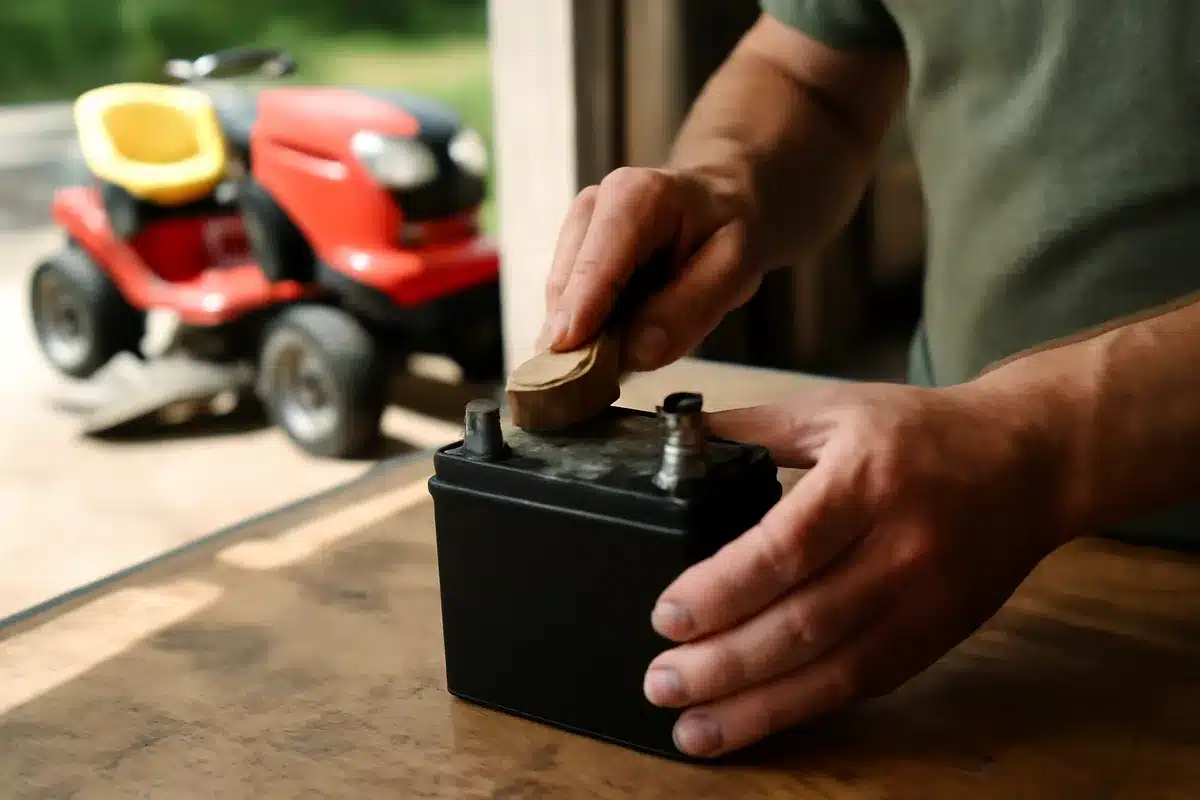
- If terminals are corroded, disconnect the negative cable first, then the positive, and clean with a wire brush.
- Connect a low-amperage battery charger and follow the charger’s instructions for charging time and mode.
- To jump-start, ensure the donor source matches the mower’s voltage, usually 12 volts.
- Attach the red (positive) clamp to the mower battery, then to the donor battery’s positive terminal.
- Attach the black (negative) clamp to the donor battery’s negative terminal, then to an unpainted metal part of the mower frame.
- Start the mower from the seat. Remove cables in reverse order once the engine runs.
If the battery won’t hold a charge after charging or jumping, swap it out. Repeated failure suggests deeper electrical trouble.
How to choose the right replacement battery
When replacement is necessary, matching specifications matters. Not every 12-volt battery is the same.
- Match group size and terminal orientation to your mower’s tray and cable layout.
- Compare cold cranking amps (CCA) and reserve capacity for reliable starts.
- Consider maintenance-free sealed batteries or AGM types for longer life.
- Keep the manual handy for manufacturer recommendations and warranty details.
Install carefully: secure the battery in the tray, reconnect positive first, then negative. Tighten clamps but avoid overtightening.
Preventive care to keep the mower battery healthy
Regular, simple practices will drastically cut the chance of a dead battery when you need the mower.
- Keep terminals clean and coated with a thin layer of dielectric grease.
- Use a smart battery maintainer during off-season storage.
- Remove and store the battery indoors in a cool, dry spot for winter.
- Charge the battery fully before storage and top it up every few weeks.
- Run the mower periodically when not in regular use to let the charging system cycle the battery.
Troubleshooting a battery that dies repeatedly
If a fresh battery fails quickly, inspect the mower’s charging system. Faults in the alternator, voltage regulator, or wiring can prevent recharging while you mow.
- Have the charging output tested by a repair shop or with a multimeter while the engine runs.
- Look for damaged wiring, blown fuses, or a slipping belt that drives the charging system.
Safe storage and seasonal tips to extend battery life
How you store and care for the battery between seasons makes a big difference in longevity.
- Disconnect and clean the battery before storing it for long periods.
- Keep it on a float charger if possible to maintain full charge without overcharging.
- Store at moderate temperatures; extreme heat shortens lifespan, and deep cold increases sulfate buildup.
Regular attention to simple maintenance tasks will save time and money and keep your riding mower ready when the grass starts growing again.