Show summary Hide summary
- Why a riding lawn mower makes grinding noises
- Immediate safety steps before you inspect
- How to check the deck and blade area
- Inspecting the spindle, mandrel and pulleys
- Wheel bearings, transaxle and other drivetrain sources
- Tools, replacement parts and repair options
- Routine checks to avoid future grinding
The first time your riding mower starts making a harsh grinding sound, it can feel alarming. That noise often signals friction or a failing component, but it doesn’t always mean a total breakdown. With a few careful checks you can often find the source, make a simple fix, or decide when to call a technician.
Why a riding lawn mower makes grinding noises
Riding mower grinding sound: what it means and how to fix it
Antique storage find doubles as stunning decor: ditch baskets and bins
Grinding typically means metal-on-metal contact or something rubbing where it shouldn’t. Common causes include:
- Debris trapped under the deck, wrapped around the spindle or blades.
- Worn or damaged spindle/mandrel assembly parts that drive the blades.
- Bad bearings in the spindle, wheels, or pulleys.
- Loose, warped, or broken pulleys and belts creating extra friction.
- Less commonly, transmission or differential problems causing mechanical grinding.
Identifying the loudness and location of the sound helps narrow the issue. Grinding under the deck points to the spindle or debris. Grinding at the wheels can mean wheel bearings or the transaxle.
Immediate safety steps before you inspect
Never try to inspect moving parts while the engine can start. Take these precautions first.
- Shut off the engine and remove the ignition key.
- Disconnect the spark plug wire to prevent accidental starts.
- Park on level ground and set the parking brake.
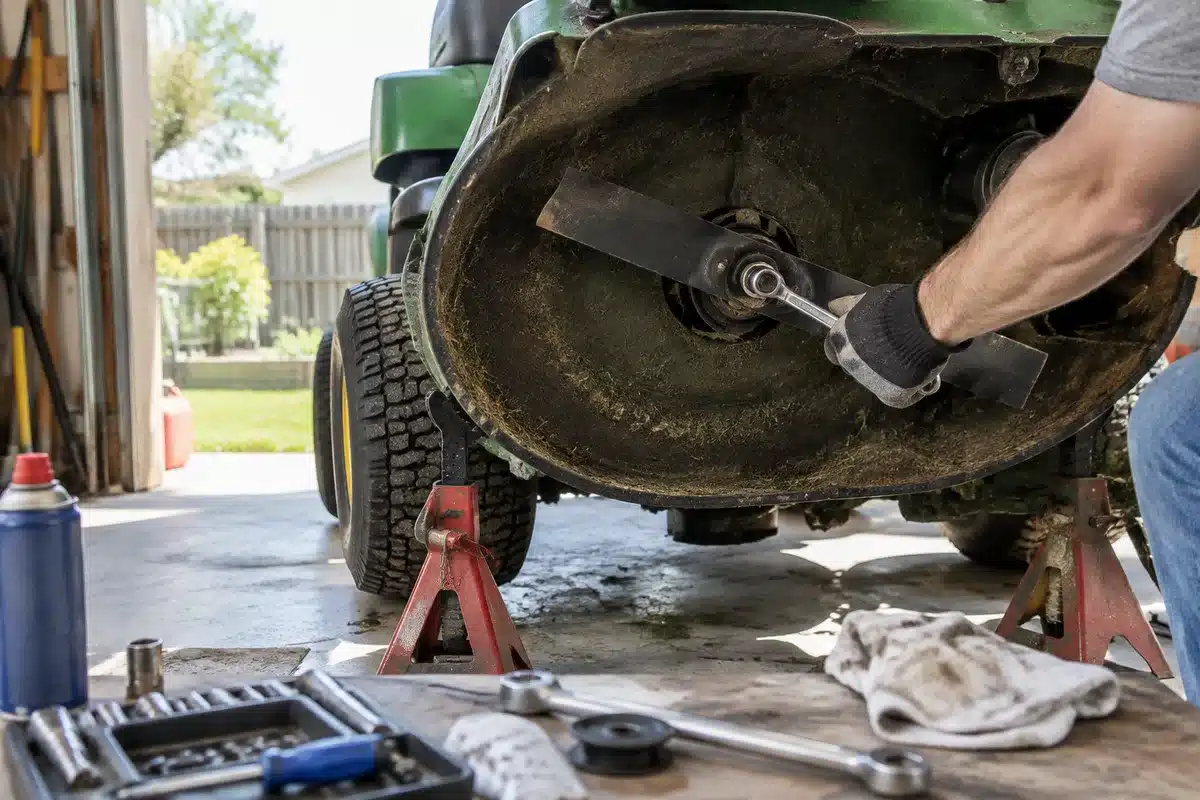
- Use jack stands or blocks if you need to lift the mower.
- Wear eye protection and cut-resistant gloves when working near blades.
How to check the deck and blade area
Start with the simplest fixes. Most grinding noises come from trapped material or a bent blade.

- Visually inspect the underside of the deck for twine, plastic, or heavy grass buildup.
- Remove visible debris with a stick or a deck-cleaning tool. Avoid bare hands.
- Look for cracked, bent, or loose blades and mounting hardware.
- Rotate the blade by hand (with the spark plug disconnected) to feel for rubbing or resistance.
Clearing the deck often stops the noise. If the sound remains, move to the spindle and pulleys.
Inspecting the spindle, mandrel and pulleys
What the spindle assembly does
The spindle or mandrel assembly holds the blade and transfers engine power. Bearings inside the spindle let the blade spin freely.
How to check these parts
- Support the mower securely and remove the belt to isolate the spindle.
- Grab the blade or spindle shaft and try to wiggle it. Any side-to-side play is a red flag.
- Spin the spindle by hand. Listen and feel for roughness or scraping.
- Inspect the spindle housing, bolts, and the pulley for cracks or missing fasteners.
If you detect grinding or heavy play, the spindle bearings or the mandrel assembly likely need replacement. These parts wear over time and can fail suddenly if ignored.
Wheel bearings, transaxle and other drivetrain sources
If the grinding seems tied to movement rather than blade rotation, check the wheels and transmission.
- Lift the mower so a suspect wheel is off the ground and spin it by hand.
- Listen for rough rotation or feel for binding. Compare to the opposite wheel.
- Low fluid, worn gears, or a failing transaxle can produce grinding under load.
Some drivetrain repairs are complex and may be best handled by a shop.
Tools, replacement parts and repair options
Common tools and parts for these inspections and fixes include:
- Socket set, wrenches, pry bar, and jack stands.
- Replacement spindles or mandrel assemblies.
- New blade bolts, pulleys, belts, and bearings.
- Grease and basic lubricants for fittings.
Spindle assemblies vary by model. Check your owner’s manual or the manufacturer site before buying parts. If a diagnosis requires removing the transmission or transaxle, consider professional service.
Routine checks to avoid future grinding
- Clean the underside of the deck after each heavy use.
- Inspect blades and hardware every season.
- Grease spindle fittings and pivot points per the manual.
- Replace belts at the first sign of cracking or glazing.
- Schedule regular tune-ups to catch wear early.
Keeping up with small maintenance tasks reduces the chance of sudden grinding and costly repairs.