Show summary Hide summary
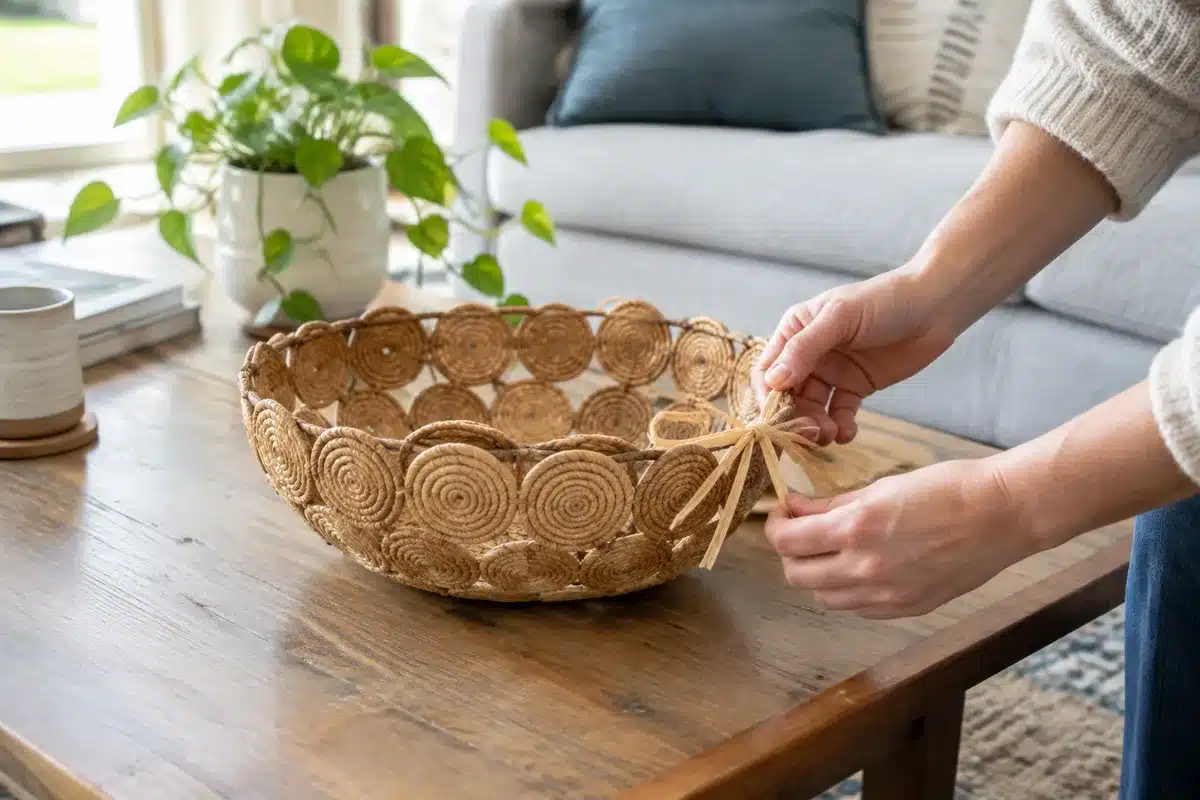
Found a stack of woven coasters at a thrift shop and wondered what to do with them? With a little patience and a few basic supplies, those humble circles can become a striking decorative bowl. This project channels boho-rattan charm and gives thrifted finds new life on your coffee table.
Gather the right thrifted pieces and tools
Water-resistant patio pillows: turn old shower curtains into covers
Best mulch for bumpy lawn: how to smooth and level around exposed tree roots
Not every coaster will work. Choose lightweight, woven rounds that have gaps you can thread through. Rattan-style and braided rope coasters are ideal. Heavy ceramic or glass pieces won’t hold the upright rim well.

- Coasters: Aim for seven: one center, six around the edge.
- Raffia ribbon, waxed thread, or strong twine.
- Large-eye needle or a blunt tapestry needle for thicker thread.
- Hot glue gun (optional) for a no-sew alternative.
- Scissors, tape, and a bowl to use as a shaping form.
Prep the coasters so they last
Secondhand items often need a quick refresh. Remove dust and debris before assembly so moisture or grime doesn’t get trapped between layers.
- Brush or vacuum loose fibers.
- Wipe gently with a damp cloth and mild soap if needed.
- Dry completely in open air. Woven fibers can mold if stored damp.
Step-by-step: transform coasters into a decorative bowl
Work slowly and adjust as you go. The method is simple: link the circles, then shape them into a shallow bowl.
Weaving or stitching the base
Lay one coaster in the center. Place a second next to it and thread raffia through the edge loop of both. Tie a secure knot. Add a third coaster to form a row of three.

- Use two stitches at each contact point for extra hold.
- If holes in the weave are tiny, a tape needle or thin awl helps guide the thread.
Building the outer ring
Position the remaining coasters around the center trio. Offset them so two of the outer coasters nestle into the gaps between the inner circles. Stitch each joint where circles meet.
To test fit, drape the assembled ring over a similarly sized bowl. Use small pieces of tape to hold placement while you sew the final seams.
Alternative: glue for non-sewers
If sewing feels daunting, a hot glue gun speeds things up. Apply glue sparingly to avoid lumps. Press pieces together until cool. Glue works well for decor-only bowls but won’t be as flexible if you need to reshape later.
Make the bowl hold its shape without heavy hardware
Because the rim stands upright, keeping the silhouette intact matters. There are lightweight tricks that add structure without changing the look.
- Wrap rope or ribbon around the outer edge and stitch or glue it in place.
- Add a wooden or cork disk to the base to give a flat platform for objects.
- For a sturdier profile, stitch pairs of joints twice or reinforce seams with clear craft glue.
Important: This piece is mainly decorative. It’s not meant to carry heavy items or catch tiny objects.
Ways to customize and elevate the design
Turn a simple coaster bowl into a standout accent with color, texture, and small details. The tweaks are easy and let your personal style show.
- Glue mini rope discs into the gaps to make the bowl less see-through.
- Add macramé fringe or tassels along the rim for a boho vibe.
- Paint or dye individual coasters before assembly for a two-tone look.
- Glue beads, wooden blocks, or fabric scraps where the coasters meet for added interest.
Use different thrift finds as a base
Instead of just coasters, try a vintage rattan placemat or woven tray as the foundation. Attach coaster rounds around the edge for a wider, more stable bowl. You may need additional coasters to wrap the circumference.
Styling ideas for your coffee table
The finished bowl reads like a curated accent piece. Keep styling simple to let texture shine.
- Place a small potted plant or faux succulent in the center for an organic look.
- Display decorative orbs, dried botanicals, or a stack of small books nearby.
- Mix materials—metal trays or ceramic vases pair well with woven texture.
- Rotate seasonal elements inside the bowl for an easy refresh.
Tip: Leave tiny items out. The open gaps mean jewelry or loose items can slip through.