Show summary Hide summary
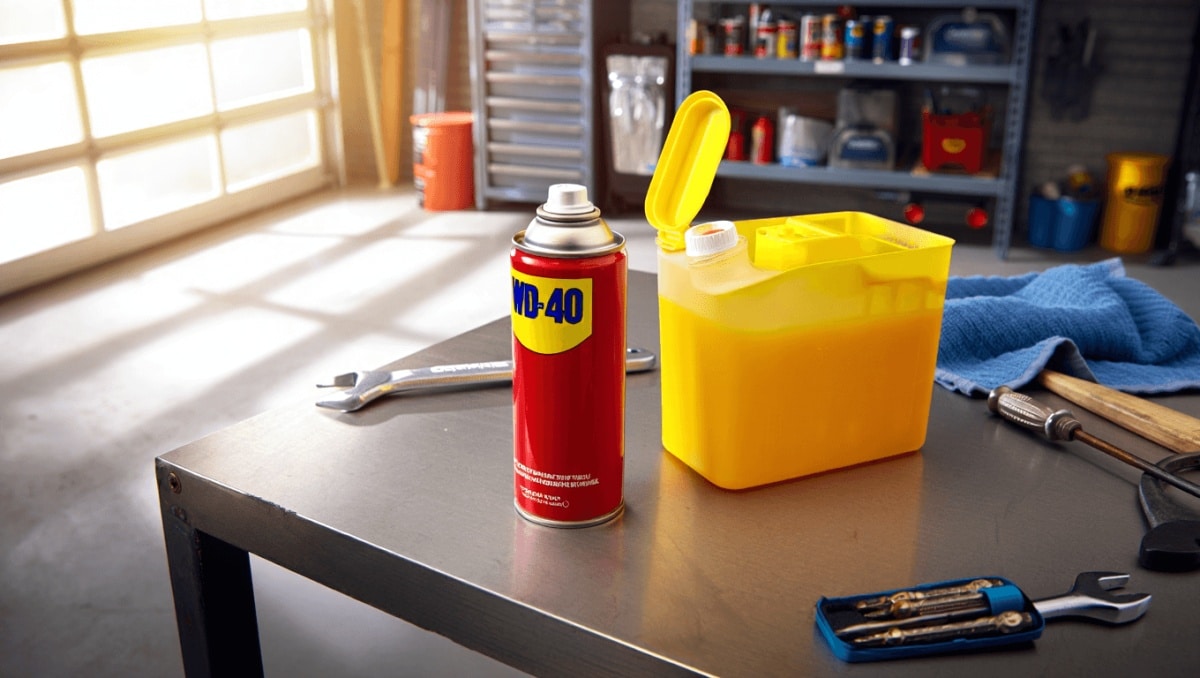
Many homes have a can of WD-40 tucked away for squeaky hinges, stuck bolts, or a quick moisture fix. It’s handy, but the way you store it matters. Placing this aerosol near the wrong chemicals can create a serious fire risk.
Why WD-40 and oxidizers are a dangerous mix
WD-40 is highly flammable. Its formula and propellant mean it vaporizes easily and can ignite at low temperatures. When a flammable aerosol meets an oxidizing substance, the odds of fire or explosion increase.
WD-40 contact cleaner: 3 things you should never spray it on
IKEA $3.99 shower organizer solves clutter: tidy your shower for under $4
Oxidizers are chemicals that release oxygen and can make other materials burn hotter or faster. Common household examples include high-strength hydrogen peroxide and pool chlorine. The risk depends on concentration. A 3% hydrogen peroxide bottle from the drugstore is mild. Concentrated solutions and pool shock are far more reactive.
Labels and safety data sheets identify oxidizers. Look for an oxidizer pictogram, often an O with flames. If an oxidizer leaks or is stored near a flammable aerosol, a tiny spark or heat source can trigger a dangerous reaction.
Places to avoid storing WD-40
- Garage or unconditioned shed: Temperatures can climb and drop dramatically here. Heat increases vapor pressure and the chance of rupture or ignition.
- Near pool chemicals: Pool shock and other chlorine treatments are oxidizers at the concentrations used for maintenance.
- Next to industrial-strength cleaners: Some cleaning agents contain strong peroxides or other oxidizing agents.
- In direct sunlight: UV exposure and heat can degrade the can and raise internal pressure.
- Within reach of children or pets: Aerosol cans should be secured to prevent accidental misuse.
Simple rules for safer WD-40 storage
Follow these practical steps to lower risk. They are easy to implement and protect your household.
- Store cans upright. This reduces leakage and keeps the valve functioning properly.
- Keep away from oxidizers. Never place WD-40 in the same cabinet as concentrated peroxides or pool chlorine.
- Choose a cool, dry, ventilated spot. A climate-controlled closet is ideal.
- Avoid garages and attics unless they are temperature controlled.
- Use a lockable container if children live in the home. A small lock box on a high shelf works well.
- Check product labels and the Material Safety Data Sheet (MSDS). They list hazards and storage guidance.
- Replace old or dented cans. Damaged containers are more likely to leak or fail.
How to identify hazardous cleaning products
- Read the concentration. Peroxide at 12% or higher is an oxidizer.
- Watch for hazard symbols. The oxidizer icon looks like an O and flames.
- Search the MSDS online if the label is unclear. Manufacturer sites usually host these sheets.
Practical storage locations that reduce danger
A few household spots work better than others. Consider these options when you put your aerosol away.
- Hallway linen closet that stays cool year-round.
- High kitchen cabinet away from cleaning agents.
- Small locked cabinet in a utility room with ventilation.
- A labeled, lockable storage box kept on an upper shelf.
When in doubt, treat it as hazardous
If you are unsure whether a nearby product is an oxidizer, separate it from flammables until you can verify. Preventing a dangerous mix is faster and cheaper than dealing with a fire.